Koilonychia – a.k.a. the ‘spoon nail’ – relates to many causes!
August 30, 2009
|
|
What is koilonychia? Koilonychia (a.k.a. ‘spoon nails’) occurs when the free edge of the nail is turned inside out (everted), resulting in a concave fingernail. What causes koilonychia? Two common causes of koilonychia are: • thyroid abnormalities; But koilonychia can also be caused by direct trauma, excessive use of oils and soaps, or other more rare medical problems such as: • impaired peripheral circulation; One must also be aware that in the hands of children a ‘spoon nail’ may occur as a normal condition of the nail (not caused by a disease). MORE ABOUT THIS FINGERNAIL DISORDER: |


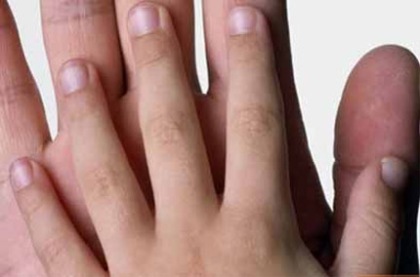
PHOTO – An example of ‘spoon nails’ (koilonychia):

• Common disorders in the fingernail & toe nail!
• News about fingernails!
• Koilonychia is a common nail disorder in the hands of children
Fingernail disorders in the hands of children!
August 4, 2009
 Fingernail disorders in the hands of children! |
Fingernail disorders in the hands of children! Many people consider fingernail disorders merely as a ‘cosmetic problem’, nevertheless fingernails provide important signs related to your health. Let’s take a look at the fingernails of children! The long version of this article describes the normal development of fingernails during childhood, including some ‘normal’ nail disorders (which are usually harmless) + an overview of the ‘serious’ nail problems in infants & children. |
| The following nail problems are relatively normal fingernail disorders in the hands of children (usually these are ‘harmless’): (1) Beau’s lines, (2) fragile nails, (3) pits of the nail plate, (4) koilonychia, (5) v-ridging (chevron nails), (6) punctate leukonychia, and (7) periungual pigmentation.
You can read more about the ‘harmless’ nail disorders in children, at: However, many other nail disorders are often related to various congenital, familial or acquired disorders. Examples of these ‘worrisome’ fingernail disorders in the hands of children are: (A) anonychia, (B) micronychia, (C) polyonychia, (D) epidermolysis bullosa, (E) pachyonychia congenita, (F) ectodermal dysplasias, (G) veillonella infection, (H) ingrowing toenail in infancy, (I) racket nails, and (J) the nail-patella syndrome. You can read more about the ‘worrisome’ nail disorders in children, at:
|


 Your Finger Nails